
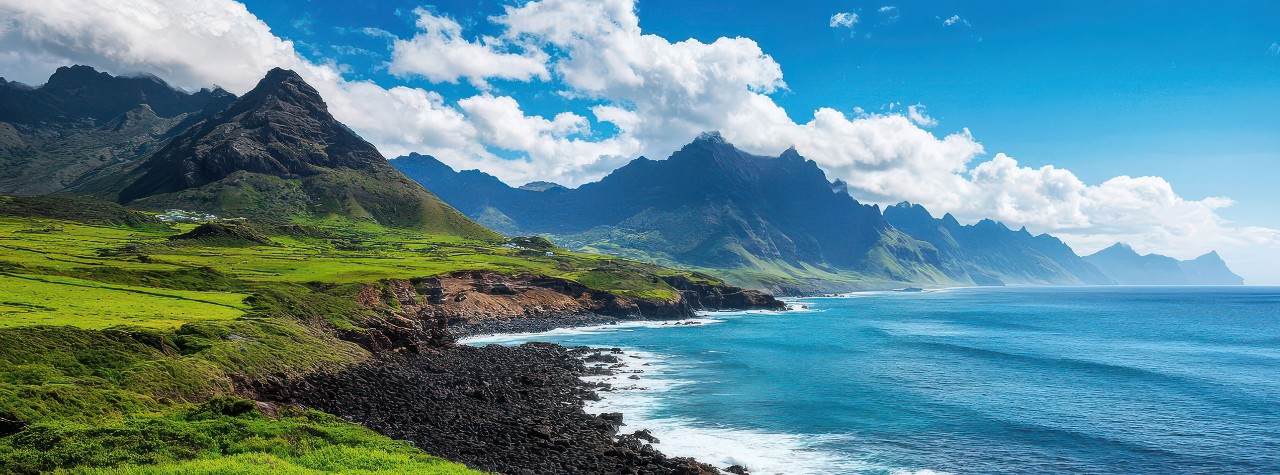
In the open South Atlantic, Tristan da Cunha emerges from the horizon as a steep volcanic island, its coastline defined by dark rock, heavy swell, and limited points of access. Reaching it requires time at sea, and arriving is never guaranteed.
Landings are entirely dependent on conditions. Swell, wind, and visibility determine whether operations can proceed, often requiring careful positioning offshore and transfer by small boat. When access is possible, it is deliberate and closely managed, shaped by both environment and infrastructure.
Edinburgh of the Seven Seas, the island’s only settlement, sits on a narrow strip of land between the ocean and rising slopes. With fewer than 300 residents, the community operates with a high degree of self-sufficiency. There are no hotels, limited facilities, and little separation between daily life and the surrounding landscape.
Weather shifts quickly, seas remain active, and wildlife moves through the same coastal waters used for approach. Each visit is defined by these variables—timing, conditions, and access—rather than a fixed plan.

