
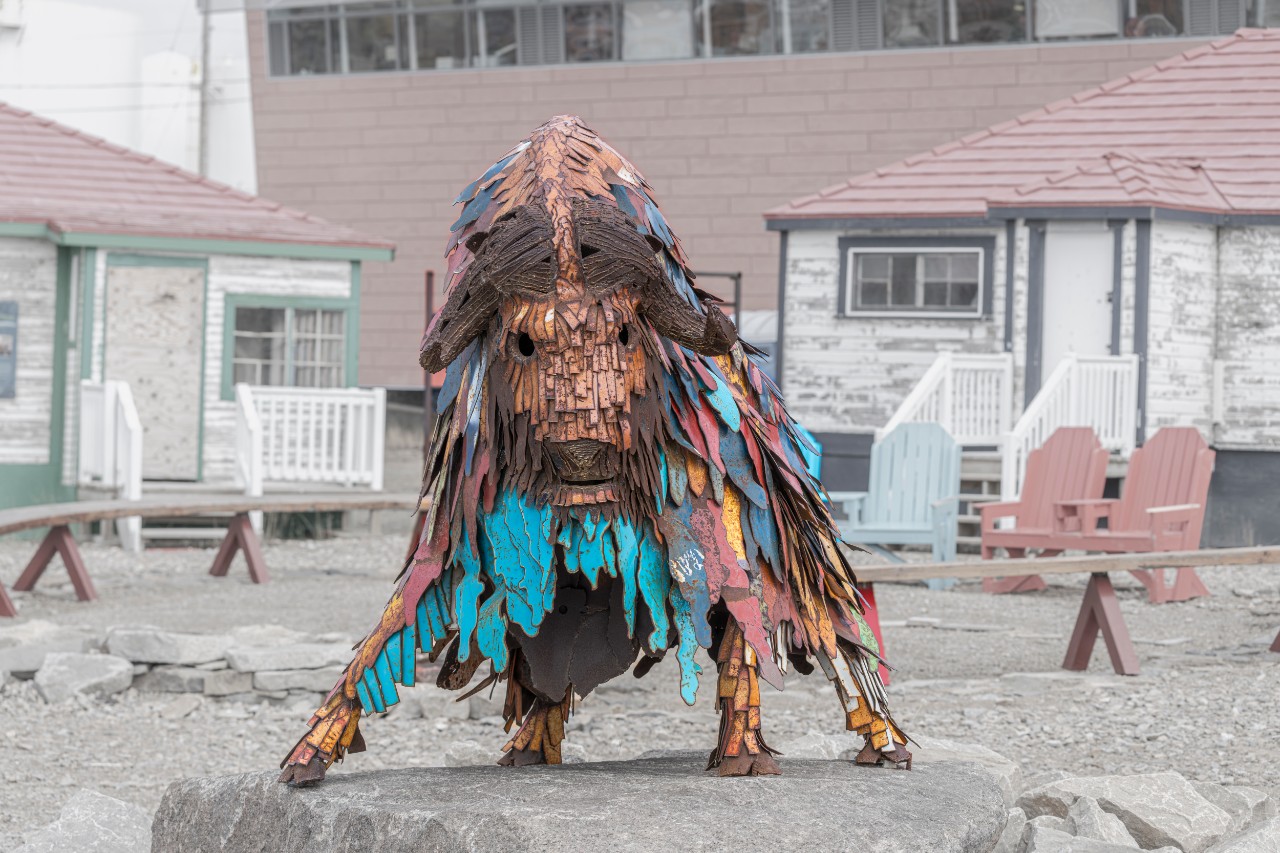
On the southeastern coast of Victoria Island, Cambridge Bay sits at the meeting point of Arctic water, tundra, and sky. Known in Inuinnaqtun as Iqaluktuuttiaq, or “good fishing place,” the community has long served as a gathering place for Inuit travel, trade, and seasonal hunting. Today, it remains one of the Canadian Arctic’s most important hubs, where contemporary Inuit life unfolds against a vast polar landscape.
Cambridge Bay occupies a singular place in the history of Arctic exploration. Roald Amundsen’s ship Maud spent years here after becoming trapped in sea ice, while subsequent decades brought military outposts, Cold War radar stations, and scientific research tied to the Northwest Passage. The Canadian High Arctic Research Station now stands at the edge of the community, linking this remote settlement to ongoing Arctic study and environmental observation.
Brightly painted homes line the shoreline above icy water where fishing boats move through brief summer seasons. Beyond the settlement, the tundra stretches outward with little interruption, home to musk oxen, caribou, Arctic char, and seals.
Cambridge Bay offers a rare look at modern Arctic life shaped by resilience, Inuit heritage, and the enduring beauty of the Far North.
