
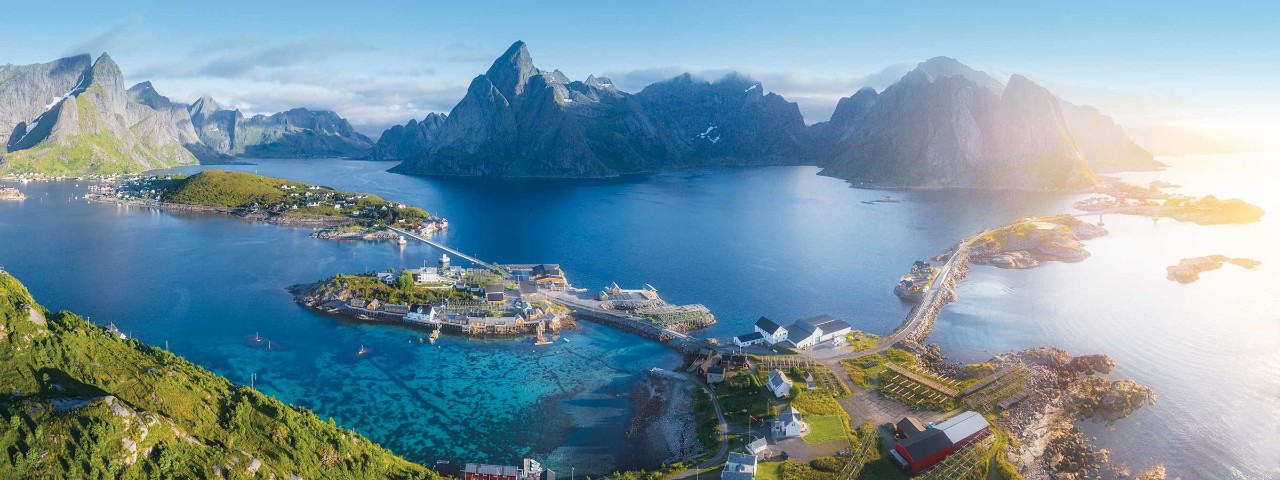
Tucked among sharp granite peaks and deep Arctic waters, Reine rests along the sheltered bays of Norway’s Lofoten archipelago, about 200 kilometers north of the Arctic Circle. Red wooden rorbuer—traditional fishermen’s cabins raised above the water on stilts—line the shoreline, their reflections drifting across quiet fjords framed by steep mountains. For centuries, life here revolved around the sea. Vikings were among the first to recognize that Lofoten’s cold, dry winds were ideal for preserving cod hung on wooden racks, creating the dried fish known as stockfish. By the 18th century, Reine had grown into a thriving fishing village and trading post, its harbor busy with boats bringing in the prized catch once called “white gold.” Though tourism now complements the traditional fisheries, the salty sea air reveals its storied history and former fishermen’s huts welcome visitors looking out across the fjords. In summer, the Midnight Sun stretches daylight deep into the night; in winter, the Northern Lights ripple above snow-dusted peaks. Whether walking along the harbor or gazing out across Reinefjorden, the village feels suspended between sea, mountain, and Arctic light.