
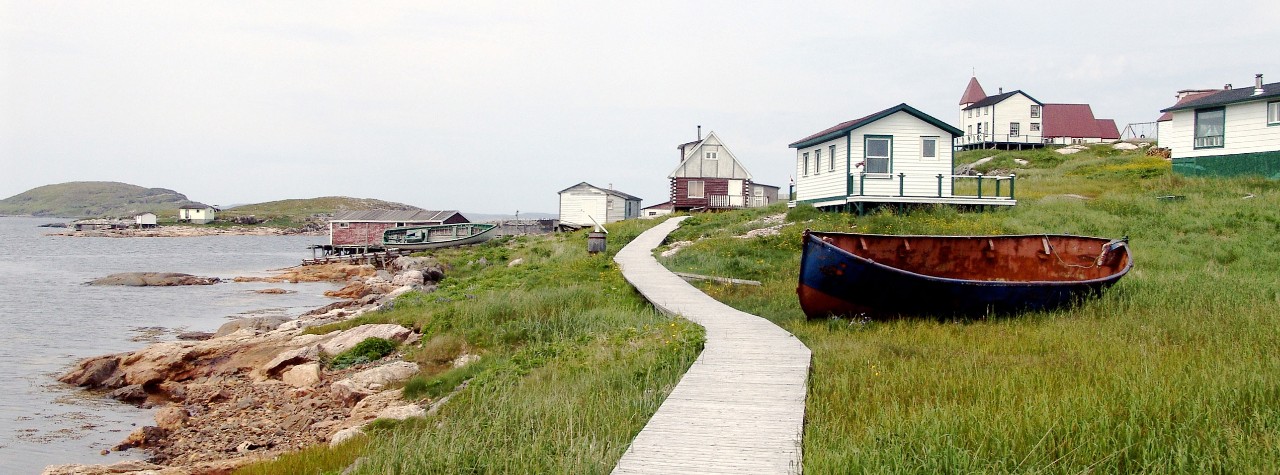
Along the northern coast of Labrador, Hopedale rests against an open sweep of rock, sea, and sky. Known in Inuktitut as Agvituk—“place of bowhead whales”—this remote Inuit community of roughly 600 residents serves as the legislative capital of Nunatsiavut, the self-governing Inuit region of Labrador.
Long before European arrival, Inuit families settled here for its access to marine life, seabirds, and inland hunting grounds. In 1782, Moravian missionaries established a mission at Agvituk, renaming it Hopedale. Their Mission House and surrounding wooden buildings still line the shoreline today as a National Historic Site, preserving more than two centuries of intertwined Inuit and Moravian history.
Following the 2005 Labrador Inuit Land Claims Agreement, Nunatsiavut gained self-government, reinforcing Hopedale’s role as both cultural and political center.
Hopedale remains the only community along this stretch of coast without tree cover, leaving homes and harbor fully exposed to Arctic winds. Fishing, hunting, and seasonal rhythms continue to shape daily life.
Time here offers a direct connection to contemporary Inuit culture and to a landscape defined by resilience.